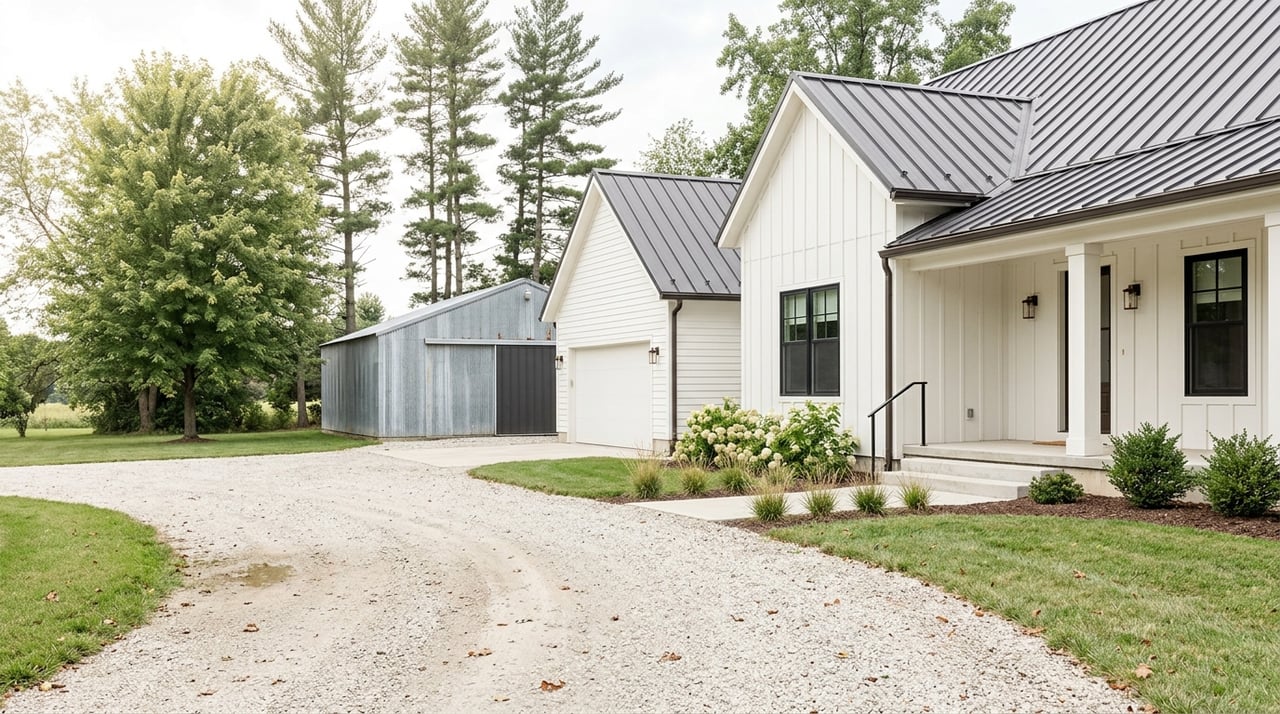
Buying New Era MI Homes With Land: Key Checks First
May 14, 2026
May 14, 2026
If you are dreaming about a home with a little more elbow room near New Era, the land itself can be just as important as the house. A great-looking property can still come with questions about access, zoning, septic, drainage, and what you can actually do with the acreage. When you know what to check before you buy, you can move forward with more confidence and fewer surprises. Let’s dive in.
Buying a home with land near New Era is not always as simple as comparing price and acreage. New Era is in Oceana County, and the village and Shelby Township are separate zoning jurisdictions. That means two nearby properties can follow different local rules depending on where the parcel sits.
This matters early in your search because zoning, permits, and even address issuance can depend on the correct jurisdiction. Oceana County notes that permanent addresses are handled differently in villages than in townships. Before you fall in love with a property, it helps to confirm exactly where the parcel is located and which office has authority over it.
County planning materials describe the Shelby Township and New Era area as mostly agricultural, with forested land and scattered rural homes. Development is more concentrated around New Era, Shelby, M-20, and Oceana Drive. In this kind of market, the value of land often comes down to how usable it is, not just how many acres are listed.
A larger parcel does not always mean a better fit for your goals. Some acreage may be limited by access, utility needs, drainage, floodplain boundaries, or soil conditions. That is why two properties with similar size can feel very different in day-to-day use.
When you tour a property, think beyond the listing sheet. Ask yourself where you would place a garden, outbuilding, driveway expansion, or future addition. If part of the land is wet, restricted, or hard to reach, the practical value of that acreage may be less than it first appears.
If the parcel was created by splitting unplatted land, Michigan’s Land Division Act becomes important. Local approval is required when unplatted land is split for sale, for a lease longer than one year, or for building development if the split creates at least one parcel under 40 acres. The parcel map must show the legal description, parcel lines, dimensions, utility easements, and access.
For you as a buyer, that means buildability is not something to assume. A survey, deed review, and split-history check are core parts of rural due diligence. These steps can help confirm that the parcel was created properly and that it has the access and easements needed for its intended use.
Access can make or break a rural property purchase. A parcel may have direct road frontage, a recorded easement, or access by private road. Each setup can come with different responsibilities and costs.
Oceana County Road Commission documents show separate permits for driveway access, shared driveways, private-road approaches, farm-field approaches, and commercial approaches. The county also has standards for driveway slope, culvert use, width, and setbacks. If a driveway needs to be widened or upgraded, a permit may be required.
You will also want to know who maintains the access. If the property is reached by a private road or shared drive, ask how maintenance is handled and whether there are shared costs. These details can affect both your budget and your long-term ownership experience.
On rural properties, even basic identifying details matter. Oceana County says permanent addresses are required for new construction, relocated structures, and replacement of existing improvements. In townships, a zoning permit is needed before the county issues the address.
That means you should confirm the parcel ID and address status early in the process. If the property does not yet have a permanent address, that may not be a problem, but it is something you will want to understand before planning a build or major update.
Many homes with land near New Era rely on private wells and septic systems instead of municipal services. District Health Department #10 handles permits for private wells and septic systems, evaluates sites, helps locate well areas, and inspects final work. This makes well and septic records some of the most useful documents to request when you are considering a property.
If a home already has a septic system, maintenance history matters. District Health Department #10 recommends septic-tank pumping every 3 to 4 years. MSU Extension notes that septic systems may function for 15 to 40 years when they are properly designed for the site, used correctly, and maintained regularly.
Private wells need attention too. MSU Extension recommends annual testing of private well water, and District Health Department #10 says testing should be done through a state-certified lab. If you are buying a property with a private well, make testing part of your due diligence plan.
If the property depends on a septic system, soil conditions are one of the biggest issues to evaluate. District Health Department #10 recommends a soil evaluation before buying a septic-dependent parcel. During that process, a sanitarian checks soil type, depth to seasonal high groundwater, and the depth of the confining layer.
This information helps answer a very practical question: can the site support septic use the way you need it to? If you are planning to build, add a guest structure where allowed, or replace an older system in the future, soil conditions can directly affect your options.
Land that looks open and appealing on a sunny day may still come with site limitations. Oceana County requires a Soil Erosion and Sedimentation Control permit for certain earth changes, including work disturbing 225 square feet or more within 500 feet of a lake, stream, wetland, or drainage system, or any earth change of 1 acre or more anywhere in the county.
This matters if you plan to clear land, build a driveway, install an outbuilding, or do grading work. Depending on the site, additional review may apply for wetlands, inland lakes and streams, shorelands, or sand dune areas.
Floodplain review is also important when a property is near a river, stream, or drain. EGLE says a state floodplain permit is required before altering or occupying the 100-year floodplain of a river, stream, or drain with a drainage area of 2 square miles or more. New residential construction is prohibited in the floodway.
Even if the home itself sits outside the floodway, you should still ask whether future improvements could be limited by floodplain boundaries. That includes fill, grading, additions, or other site work.
One of the best parts of buying a home with land is the extra flexibility that can come with barns, garages, sheds, or pole buildings. But these structures should be reviewed carefully. Oceana County building permit forms include separate sections for garages and pole buildings, and the county issues building, electrical, mechanical, and plumbing permits for structures in the county.
In simple terms, do not assume an outbuilding is fully approved just because it is already standing. Ask whether permits were issued and whether any additions or utility connections were done properly. This can help you avoid surprise costs later.
Near New Era, zoning can change by parcel. Oceana County lists separate zoning contacts for New Era Village and Shelby Township. That means a property’s mailing address or general area does not always tell you which office to call.
This is especially important if you are thinking about future changes. A fence, shed, barn, second garage, or addition may require review by the correct local office. Checking this early can save you time and help you plan more realistically.
Owning land often comes with a different maintenance routine than owning a smaller in-town lot. Septic drain fields should not be driven over, and deep-rooted plants should not be placed on them. They also need protection from excess water and heavy equipment.
Road access can bring long-term upkeep as well. Depending on the site, culverts, driveway slopes, shoulder work, and right-of-way standards may all affect future maintenance costs. These are not always deal-breakers, but they should be part of your planning.
If using an ORV matters to your lifestyle, check local rules before you buy. Oceana County does not have a countywide ORV ordinance, and each township decides whether ORV use is allowed on roadways. That kind of local variation is common with rural property.
When you walk through a home with land near New Era, keep your questions simple and focused:
A rural property can be a great fit when the details line up with your plans. The key is making sure the land works for you legally, physically, and financially, not just visually.
If you are considering a home with land near New Era, having local guidance can make the process much easier. Gabriela Peterson can help you look beyond the acreage number and focus on the details that matter most for your goals.
Gaby brings dedication, expertise, and a personal touch to every step of the process. With deep knowledge of the market and a passion for helping clients succeed, Gaby ensures your real estate journey is smooth, transparent, and stress-free.