Effective Basement Waterproofing Solutions in Rothbury MI
November 6, 2025
November 6, 2025
Is that musty smell or white film on your basement walls making you nervous about your home or upcoming sale? In Rothbury, moisture can sneak in quietly, especially during spring snowmelt or heavy fall rains. You want clear, low‑drama fixes that actually work in our sandy soils and help you avoid inspection surprises. This guide gives you practical steps you can take now, plus what to consider if bigger solutions are needed. Let’s dive in.
Rothbury sits in western Michigan near Lake Michigan, where a humid continental climate brings cold winters, spring snowmelt, and periodic heavy rain. Those seasonal swings affect groundwater and runoff around foundations. The freeze–thaw cycle also matters because it affects grading, downspout discharge, and drain performance.
Our area’s soils are mostly sandy glacial deposits. Sandy soils let water infiltrate quickly, which helps prevent ponding when grading and gutters are right. But that same permeability means water can move through the ground and find your foundation fast, especially if there is higher ground upslope of your home.
Groundwater depth changes a lot from one property to the next. In low spots or near lakes and streams, the seasonal water table can rise within a few feet of the surface. That is why a site‑specific look at your grading, drainage, and sump setup is the first step before you decide on interior or exterior waterproofing.
Address surface water first. In sandy soils, moving water away from the foundation is often the fastest, most cost‑effective step.
Aim for a finished grade that drops about 6 inches over the first 10 feet from your foundation. Maintain a smooth, continuous slope without low spots that trap water. If you add fill, compact it appropriately and match it to your existing soil so it sheds water without eroding.
In sandy soils, protect slopes from erosion. Mulch, groundcover plants, or erosion control fabric keeps the surface stable while vegetation takes root. In places where water concentrates, consider small rock or riprap to slow the flow.
Keep gutters clear so they do not overflow next to foundation walls. Extend downspouts so water discharges 4 to 10 feet away, ideally toward lower ground. Use splash blocks, above‑grade extensions, or buried lines that daylight safely downslope.
Plan for winter. Route extensions so water does not freeze across sidewalks or patios. If you use buried lines, ensure they keep a gentle slope and stay clear to prevent ice from backing up toward the house.
Sandy soils often handle dry wells or infiltration trenches well, as long as the seasonal water table sits well below the bottom of the trench. Before you install, observe how your yard drains after a heavy rain or have a simple percolation test done. Place any infiltration feature downslope of the house, protect inlets from sediment, and size it for the expected roof area.
Local rules may limit where you can discharge stormwater. Check with township or county offices if you plan to connect to a storm system or do larger exterior work.
If groundwater rises near footing level or you see active seepage through walls, interior or exterior drainage may be needed. Choose the path based on severity, budget, and whether you plan to finish the basement soon.
Excavating to the footing and installing an exterior waterproofing membrane with a perimeter drain offers robust protection. In sandy soils, digging is often easier than in clay, but attention to membrane adhesion and clean drainage stone is important. This approach is a strong choice for chronic seepage, visible hydrostatic pressure, or before a major basement remodel.
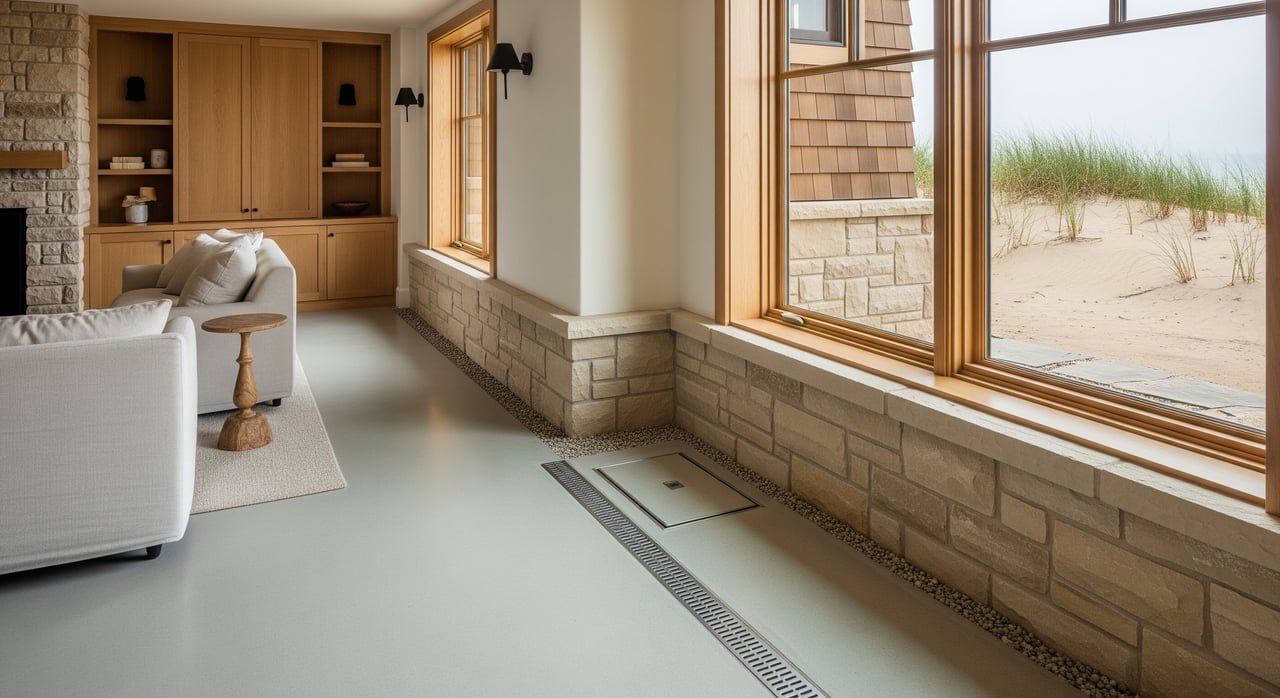
An interior perimeter drain collects water at the slab‑footing joint and routes it to a sump pit, where a pump discharges it outside. This retrofit is common when exterior excavation is impractical. In sandy soils, interior drains are effective at relieving water that reaches the foundation line. Pair this with good exterior grading and downspout work for best results.
Your sump must run during storms when power can go out. Add a battery backup pump, a standby generator, or both. Test your pump seasonally, clear debris, and confirm the discharge line is open and directs water far from the foundation. In winter, route the discharge downhill and away from walkways to prevent icing, or to a permitted storm system where allowed.
If you are planning to sell, moisture control is about clarity and confidence. Buyers and inspectors look for evidence of past water issues and working systems. Simple fixes and clear documentation go a long way.
Exterior excavation, drain connections, or stormwater work may require permits. Check local rules before starting. In Michigan, you must disclose known water problems, so keep records of your fixes and maintenance.
Timing matters. Exterior grading and excavation work best from late spring through early fall when the ground is thawed and drier. Interior work can be done year‑round. If you list in winter, focus on functional basics with documentation and plan any large exterior work for warmer months.
Every property in Rothbury is different. Slight changes in slope, a short downspout, or a nearby low spot can make a big difference in a sandy yard. When you have a clear plan and documentation, you reduce surprises during showings and inspections and help buyers feel confident.
If you are weighing which fixes matter most for your sale, I can help you prioritize, connect you with trusted local pros, and prep your listing to shine. Schedule your free consultation with Gaby Peterson at Five Star Real Estate to get a smart, local plan that protects your basement and your bottom line.




Gaby brings dedication, expertise, and a personal touch to every step of the process. With deep knowledge of the market and a passion for helping clients succeed, Gaby ensures your real estate journey is smooth, transparent, and stress-free.