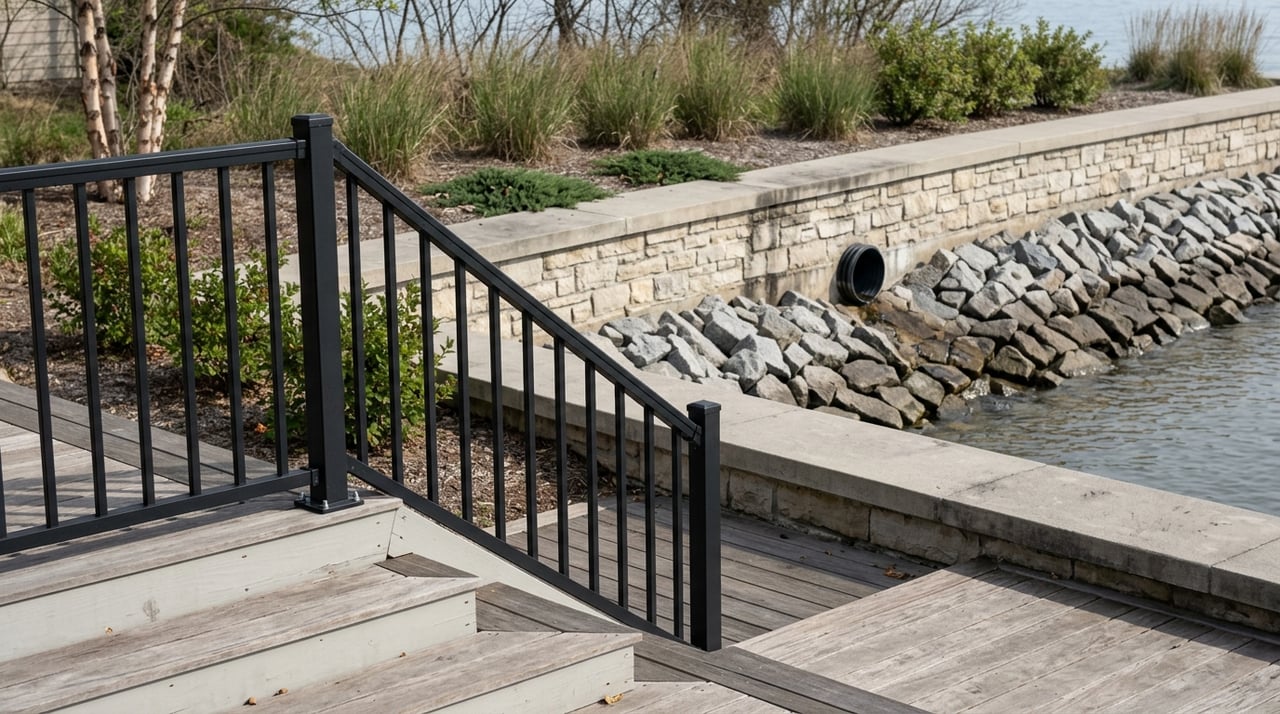
Practical Guide to Buying Ludington Waterfront Homes
May 7, 2026
May 7, 2026
Dreaming about a waterfront home in Ludington? You are not alone, but buying near the water here involves more than picking a house with a pretty view. From Lake Michigan frontage to channel-front parcels on Pere Marquette Lake, each property can come with different zoning, shoreline rules, and long-term ownership responsibilities. If you want to buy with confidence, it helps to know what to check before you fall in love with a listing. Let’s dive in.
Not all waterfront homes in Ludington are the same. In this market, you may be comparing true Lake Michigan frontage with channel-front property or homes on Pere Marquette Lake, and those differences matter from day one.
The local waterfront is also closely tied to boating access and shoreline conditions. The city marina sits on Pere Marquette Lake and offers direct access to Lake Michigan, which gives you a good sense of how connected the area’s water features are in everyday ownership.
Another key factor is zoning. Ludington adopted a new Unified Development Ordinance, and current code materials include Waterfront zoning and a Lakefront Overlay. If you are evaluating a parcel, you will want to rely on the current ordinance instead of older summaries or assumptions.
Before you think about finishes, square footage, or dock potential, confirm what kind of waterfront you are actually buying. That single detail can shape zoning, setbacks, future improvements, and even how you use the property.
Lake Michigan frontage inside the city comes with extra rules under Ludington’s Lakefront Overlay. The ordinance says this overlay is meant to protect dune areas and other sensitive natural features while still allowing residential use.
For these parcels, setbacks from Lake Michigan are measured from the Regulatory Ordinary High Water Mark. The ordinance also states that principal buildings and accessory structures must be set back at least 200 feet from the waterfront lot line.
That is a major difference from a typical residential lot. If you are considering a Lake Michigan parcel, verify the exact zoning designation, the mapped waterfront lot line, and whether any existing structures are lawful nonconformities.
A home that faces the water is not automatically regulated like Lake Michigan frontage. The ordinance states that lots not abutting Lake Michigan use N-district setbacks, which means channel-front and Pere Marquette Lake parcels may follow a different set of rules.
This is why you should never assume two waterfront listings are equal just because both offer water views. In Ludington, the type of frontage can affect what you can build, how the site can be used, and what your future plans may look like.
Many buyers picture a waterfront home as an easy path to boating. Sometimes that is true, but in Ludington, access should be treated as something to verify rather than assume.
The Ludington Municipal Marina is a deep-water protected harbor on Pere Marquette Lake with 174 slips for seasonal and transient dockage. The city also notes that seasonal slips can involve a waiting list, so if boating is a big part of your plan, ask questions early.
Waterfront real estate often rewards careful due diligence. In Ludington, that starts with confirming the parcel’s zoning district and whether an overlay applies.
For Lake Michigan frontage, zoning can directly affect setbacks and site planning. For other waterfront parcels, rules may differ in ways that are not obvious from the listing photos.
This is one area where details matter more than assumptions. A home can be beautiful and still have limitations that affect additions, accessory structures, or long-term use.
One of the smartest things you can do is review flood and erosion issues before your purchase agreement becomes final. Waiting too long can create stress, extra cost, or a surprise that changes your plans.
Mason County identifies flood-hazard areas on Lake Michigan, Pere Marquette Lake, the Pere Marquette River, and the South Branch of the Pere Marquette River. The county says buyers or builders in floodplain areas should obtain a survey to determine base flood elevation and will need an elevation certificate.
The county also states that a qualified design professional is required for work within the 100-year floodplain. If you may build, expand, or substantially improve the property later, this is important to understand up front.
Great Lakes shoreline boundaries are dynamic. EGLE explains that shoreline property along the Great Lakes behaves like a movable boundary because water levels change, and the public has rights below the ordinary high-water mark.
For you as a buyer, that means the usable beach or shoreline area should be confirmed by survey. It is not something you should rely on from a listing description or a quick walk-through.
EGLE also notes that designated parcels in high-risk erosion areas can require setback distances from the erosion hazard line. New construction in the Great Lakes 100-year floodplain must also be elevated.
If your dream includes building, expanding, or changing shoreline features later, these rules should be part of your early screening process. It is much easier to evaluate those constraints before you commit than after closing.
A waterfront property can come with future maintenance and improvement needs. If you are thinking about a dock, boat lift, seawall, dredging, or shoreline stabilization, permitting may be part of the picture.
EGLE requires permits for filling, dredging, docks, boat lifts, and seawalls on Great Lakes bottomlands below the ordinary high-water mark. For Great Lakes projects that require an EGLE permit, USACE review is also required.
EGLE says shoreline hardening should be avoided where plantings or natural stone can work, because shoreline structures can create negative effects on natural resources and adjacent shoreline properties. That is useful to know if you are buying a property with the idea of making major shoreline changes.
For projects at the land-water edge, EGLE’s Joint Permit Application may cover wetlands, floodplains, inland lakes and streams, Great Lakes bottomlands, critical sand dunes, environmental areas of concern, and high-risk erosion areas.
EGLE says a pre-application meeting can save time, and complete applications are usually decided in 30 to 90 days, with spring and summer being the busiest seasons. That timeline can matter if your purchase decision depends on future improvements.
At the local level, Mason County requires soil-erosion permits for earthwork within 500 feet of a lake or stream and for projects larger than 1 acre. Inside Ludington city limits, building permits are required for construction, while electrical, mechanical, plumbing, and heating or cooling permits are handled through Mason County.
Waterfront purchases often involve more than the home itself. Boundaries, easements, bottomlands, and shoreline occupation issues can all affect what you truly own and how you can use it.
That is why a current survey and title review are especially important. If dock rights, waterfront lot lines, or Great Lakes bottomlands are involved, those documents can help you confirm the legal picture before closing.
EGLE’s conveyance instructions for Great Lakes bottomlands require proof of ownership, a signed and sealed survey from a licensed land surveyor, and a written legal description. The agency also accepts title insurance or a legal title opinion from a registered attorney as part of ownership documentation.
If the waterfront home is part of a condominium or homeowners association, read the governing documents carefully. These documents can define common elements, use rights, fees, assessments, and operational rules.
Michigan’s Condominium Buyer’s Handbook notes that buyers should review the master deed and bylaws because they define how the community operates. The handbook also says condominium documents must be made available to prospective purchasers.
This review matters even more if your interest in the property includes shared waterfront amenities, docks, or other common areas. You want to know exactly what is included and what rules apply.
If you are thinking about seasonal use or investment potential, local rental rules should be part of your buying decision. In Ludington, short-term rentals are regulated by the city.
The city requires a short-term rental license, and licenses terminate when ownership transfers. Waterfront-district rentals are also subject to city regulations, so you should confirm how the property is currently used and what would be required after closing.
This is an area where buyers can get tripped up if they wait until after purchase. If short-term rental use matters to you, review the local rules before you make an offer.
If you want to stay focused during your search, this simple checklist can help:
In Ludington, buying waterfront is less about finding any home near the water and more about matching the right parcel to your goals. When you understand the frontage type, zoning, shoreline conditions, and long-term ownership needs, you are in a much stronger position to buy wisely.
If you are thinking about buying a waterfront home in Ludington, local guidance can make the process feel much more manageable. Gabriela Peterson can help you evaluate listings, ask the right questions, and move forward with clarity.
Gaby brings dedication, expertise, and a personal touch to every step of the process. With deep knowledge of the market and a passion for helping clients succeed, Gaby ensures your real estate journey is smooth, transparent, and stress-free.