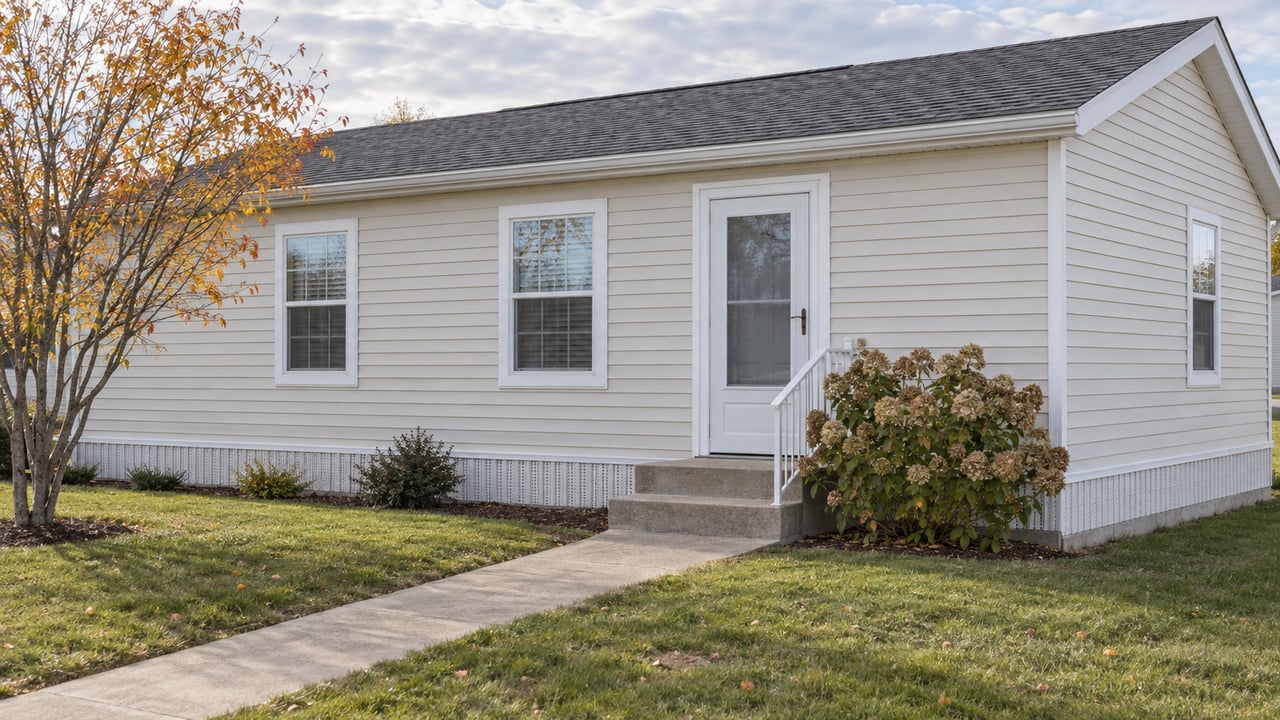
In Hart, a Manufactured Home's Loan Type Can Shape Its Interest Rate
October 1, 2026
October 1, 2026
A manufactured home listed at $95,000 outside Hart can turn into two very different loans, and the split has nothing to do with a buyer's credit score or how well the price gets negotiated. It comes down to one fact settled before financing ever starts, whether the state treats the home as personal property, the same category as a car, or as real property, the same category as a house built on site. Michigan's Secretary of State issues an actual certificate of title for a manufactured home, just like a vehicle title, unless and until that title is retired and the home is recorded as part of the land underneath it. That administrative fork routes a buyer toward one of two financing systems that price money very differently.
For a buyer shopping in Oceana County, the fork usually gets pulled long before a loan application, at the moment they choose between a home on leased land in a community and a home going onto land they already own or plan to buy.
Hylander Valley Inc, a land-lease manufactured home community off Monroe Road in Hart, is a workable example of one side of that fork. The park sits within the Hart and Pentwater school districts, has operated since 1990, and is run day to day by an onsite couple, with sales handled through Little Valley Homes, the sales arm of Little Valley Communities. Lot rent runs from $400 to $1,200 a month depending on the site, and residents own the structure while leasing the ground it sits on.
That choice can affect financing for a buyer choosing a home at Hylander Valley, or at any of Oceana County's other land-lease communities such as Lakewood Mobile Home Park in Pentwater or Evergreen Village in Hesperia.
| Real property (affixed) | Personal property (chattel) | |
|---|---|---|
| 2026 rate range | roughly 6.5% to 7.5% | roughly 7.5% to 12% |
| Typical term | up to 30 years | 15 to 23 years |
| Down payment | often 5% or less with FHA or VA | typically 5% to 20% |
The gap in that table is not a rounding error. It is the difference between borrowing against a house and borrowing against something the lender can legally treat like a truck.
Run the math on a $75,000 loan to see roughly what that spread means in a monthly payment. Financed as a chattel loan at 8.5 percent over 20 years, that balance runs close to $650 a month. Financed as a conventional mortgage at 6.5 percent over 30 years, available once the home is titled as real property, the same balance runs closer to $475 a month. That's roughly $175 a month, or about $2,100 a year, for an identical amount borrowed against an identical home. That payment difference is only one part of the affordability picture.
Nationally, chattel loans still finance about 42 percent of manufactured home purchases, according to Consumer Financial Protection Bureau data cited in Action News Jax's reporting on manufactured housing. Factory shipments of new manufactured homes reached 103,300 units in 2024, up from 89,169 the year before, at an average sale price around $123,300. For buyers drawn to manufactured housing specifically because the sticker price undercuts a site-built home, the financing gap can quietly erase a meaningful share of that savings before the first payment comes due.
Michigan treats a manufactured home like a vehicle until someone completes the paperwork that says otherwise. The Secretary of State issues a Certificate of Manufactured Home Ownership, the title fee is $90, and a 6 percent use tax applies to the declared value at transfer. To move a home out of that system and into real property, Michigan's Mobile Home Commission Act requires the owner to file a completed Affidavit of Affixture, describing the home by manufacturer, year, model, and serial number, along with the certificate of title and a legal description of the land it sits on. Once the state cancels the vehicle-style title, the affidavit is recorded with the county register of deeds and the home legally becomes an improvement to the land, the same as a poured foundation or an attached garage.
This rule hasn't sat still. The Manufactured Housing Resource Guide explains that, after a 2003 federal appeals court ruling held that liens on Michigan manufactured homes could only be secured through the vehicle title system, the legislature passed Act 44 that same year so lenders could also perfect a lien the way they would on any other real estate, then revisited the language again in 2005 to smooth out the process.
Older homes complicate this further. Plenty of manufactured homes in Oceana County have sat on the same foundation for decades, sometimes with the original certificate of title lost, discarded, or never transferred correctly in the first place. The MortgagePoint reports that Michigan addressed that gap in 2022, allowing an owner to file an Affidavit of Missing Mobile Home Title instead of the original certificate, provided the home has been affixed for at least 15 years, the wheels and towing hitch have been removed, and no payments remain owed on it. The catch is evidence, since the state wants proof of the date of affixture or the date the home was added to the local tax roll, and county treasurers don't always have records reaching back that far. A buyer looking at an older manufactured home with no title in hand should ask early whether that documentation exists, since the workaround only helps if the paper trail cooperates.
Can a chattel loan be converted to a mortgage later? Yes. Once the owner purchases the land, permanently affixes the home to a foundation, and completes the Affidavit of Affixture, refinancing into a real-property mortgage becomes possible, typically bringing the lower rate range along with it.
Does every manufactured home community near Hart operate as a land lease? Hylander Valley operates that way, and it's one of several such communities across Oceana County, alongside parks like Heritage Hills Mobile Home Estates in Ludington. Land arrangements vary by park, so lease terms and lot rent should be confirmed directly with each community before assuming how a specific home will be financed.
Who handles the title before a home is affixed? The Michigan Department of State, the same office that handles vehicle titles, not the county register of deeds. The register of deeds only enters the picture once the Affidavit of Affixture is filed and recorded.
If you're weighing a manufactured home on leased land against one going onto property you'll own outright, that decision is worth working through before you fall for a specific home. Gabriela Peterson works with buyers across Oceana County's land-lease communities and owned-land listings alike and can walk you through what each path means for financing before you write an offer. Schedule your free consultation.
This article is general information, not legal, tax or financial advice. Consult a qualified professional about your situation.
Gaby brings dedication, expertise, and a personal touch to every step of the process. With deep knowledge of the market and a passion for helping clients succeed, Gaby ensures your real estate journey is smooth, transparent, and stress-free.